Thailand & UN

“The way to secure Thailand’s peace and prosperity is through full respect for democratic principles and engagement in democratic processes”

- UN Secretary-General Ban Ki Moon in a statement on 20 May 2014

photo-1623278589094-6741f418d3bf

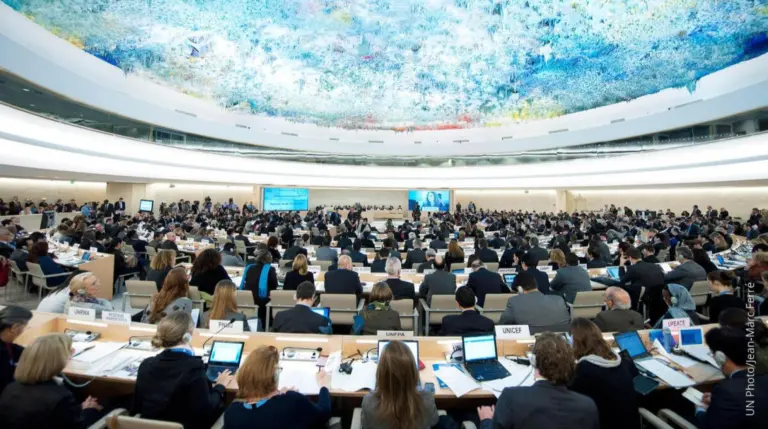
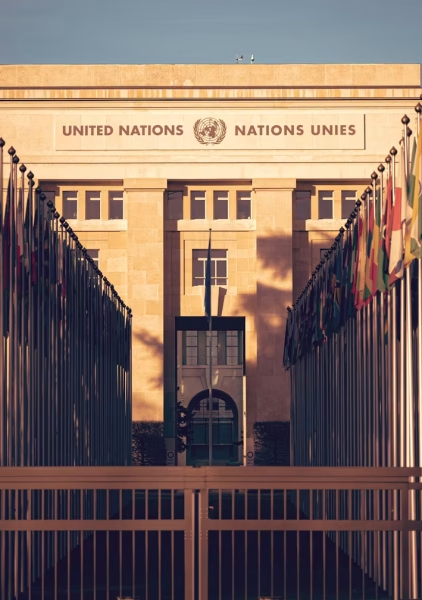
WHAT IS THE UN HUMAN RIGHTS COUNCIL?​

Established in 2006, the UN Human Rights Council (HRC) aims to promote universal respect for and protection of all human rights and fundamental freedoms, without distinction and in a fair and equal manner. It addresses human rights violations, including gross and systematic abuses, makes related recommendations, and promotes the implementation of states’ human rights obligations, including those stemming from UN conferences and summits. Elected members are expected to uphold the highest standards in promoting and protecting human rights.

The Council meets at least three times a year and submits annual reports and recommendations to the UN General Assembly, contributing to the development of international human rights law.

The HRC replaced the discredited UN Commission on Human Rights, which faced criticism for including human rights violators. In its place, the HRC committed to stronger protections and accountability for global human rights.

The Council meets at least three times a year and submits annual reports and recommendations to the UN General Assembly, contributing to the development of international human rights law.

c1_3112089_250928110135_800

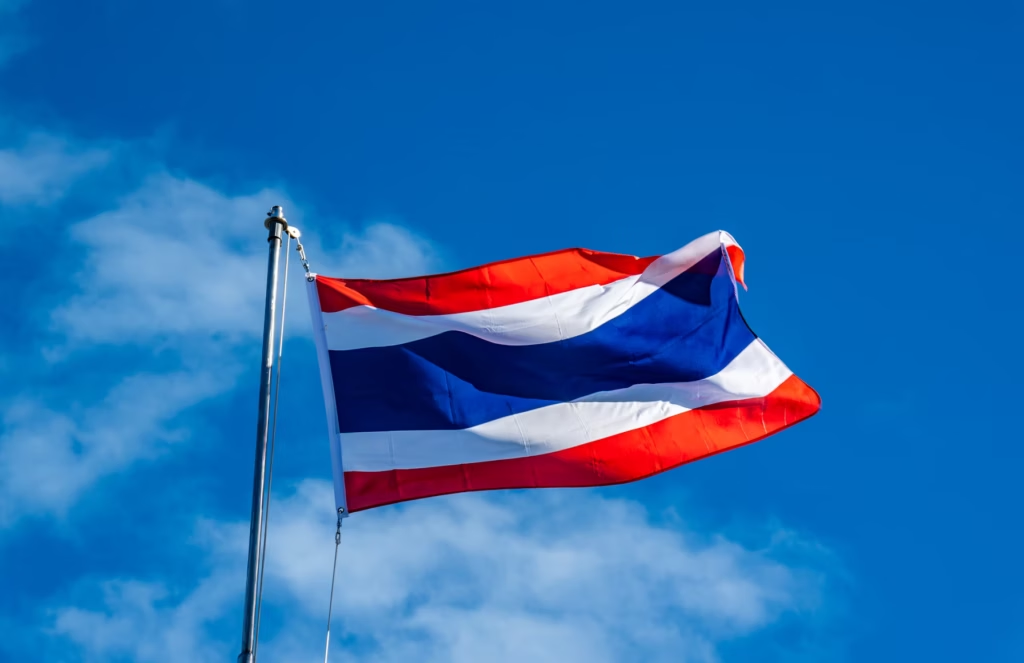
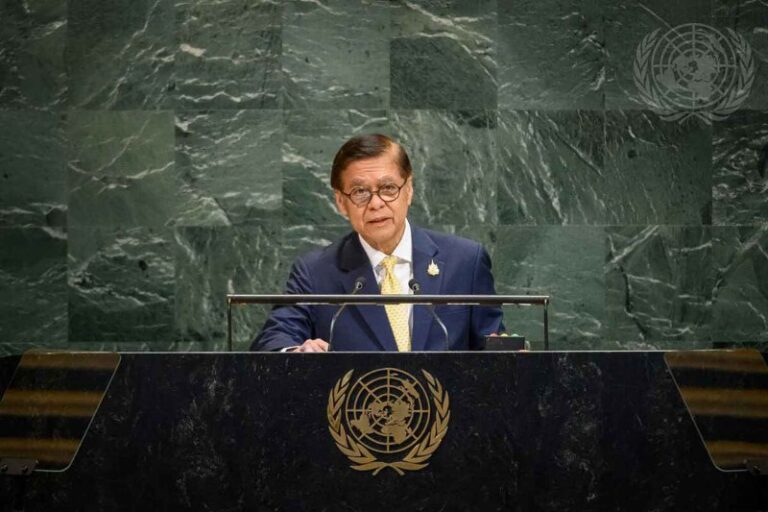
Thailand secured its first seat on the Human Rights Council on 13 May 2010, four years after the Council was established. It received 182 out of 193 votes from UN Member States. Moreover, Thailand had one of its own H.E. Mr. Sihasak Phuangketkeow serve as President of the Council for its fifth cycle from June 2010 to June 2011.
2010
THAILAND-COUP-TANKS

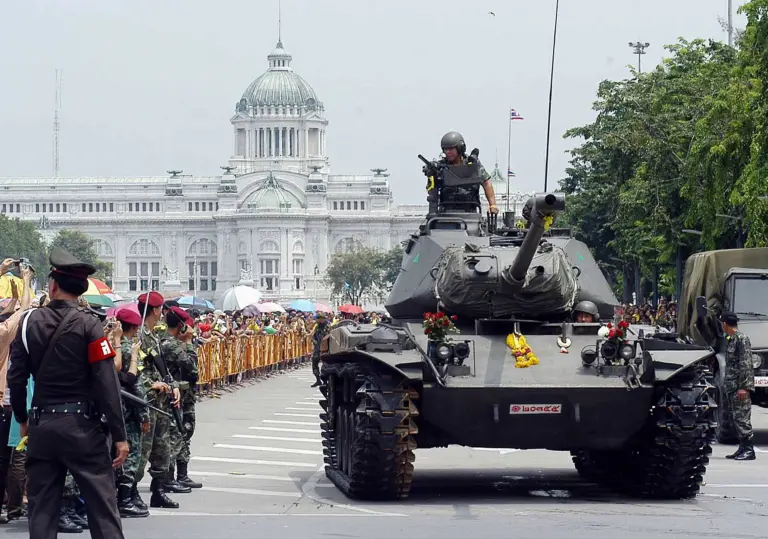
Thailand launched its second bid for a seat on the Human Rights Council but only received 136 votes, falling short of the elected members: India (162), Indonesia (152), Bangladesh (149), and Qatar (142). The failure is widely attributed to international backlash following the military coup.

2014
MFA

Thailand began its campaign for a seat on the UN Human Rights Council, with officials publicizing the country’s intention to seek candidature on the official MFA (Ministry of Foreign Affairs) website.

2022
FDaxZRGVcAAgWLT-2_0

On 9 October 2024, Thailand was elected to the United Nations Human Rights Council for the 2025–2027 term. Representing the Asia-Pacific Group, Thailand serves alongside Qatar, Cyprus, the Marshall Islands, and the Republic of Korea during this period. The term began in January 2025.

2024
pexels-danielnouri-8253150

Thailand will conclude its 3-year term on the Human Rights Council.

2027

THAILAND’S PLEDGES

When Thailand was campaigning for a seat on the Human Rights council, it pledged a lot of promises at the national, regional, and international level. Here are a few: 

Legislative amendments

  • Take steps towards developing and revising legislation, policies and regulations to be in line with international human rights treaties to which Thailand is party and ensure effectiveness of the national implementation thereof.”
  • “Take into account the recommendations received from the treaty bodies, the special procedures of the Human Rights Council and the recommendations accepted by Thailand during the universal periodic review in the formulation and implementation of policies and legislation.”

Supporting UN mechanisms

  • “Support the work of the Human Rights Council and other United Nations human rights mechanisms with the aim of improving the human rights situation on the ground on a non-discriminatory basis.”
  • “Engage constructively with and further promote the effective work of the special procedures of the Human Rights Council and take into account their recommendations to improve human rights situations around the world.” 
  • “Advocate for the non-politicization of human rights and further work to uphold the role of the Human Rights Council as a forum for constructive dialogue and promote the progressive role of the Council in preventing human rights violations and abuses on the ground.”

WHAT MUST THAILAND DO NOW THAT IT IS ON THE HUMAN RIGHTS COUNCIL?

Securing a seat on the UN Human Rights Council is an immense honor for Thailand. But with this honor comes the heavy responsibility of upholding and advancing human rights both domestically and internationally. TLHR urges Thailand to follow through on its pledges by first addressing the human rights issues that are right on its doorstep.

In order to demonstrate to the Thai people and the international community that Thailand is ready to assume the responsibility attached to a seat on the UN Human Rights Council, the Thai government must:

  • Cease political prosecutions and grant amnesty to people prosecuted for exercising their rights to freedom of expression and peaceful assembly, including those prosecuted under Section 112 (lèse-majesté) of the Criminal Code;
  • Amend Section 112 (lèse-majesté) of the Criminal Code and bring it into line with international standards; and
  • Cease all forms of harassment, judicial or otherwise, targeting children for exercising their rights to freedom of expression and peaceful assembly.