Treaties

"Everyone charged with a criminal offence shall have the right to be presumed innocent until proved guilty according to law."

- Para 2, Article 14 of the International Covenant for Civil and Political Rights (ICCPR)

THAILAND & TREATIES

Human rights are the foundation of dignity, justice, and peace in every society. Since the adoption of the Universal Declaration of Human Rights (UDHR) in 1948, the United Nations has developed a framework of nine core international human rights treaties that define and protect the rights of individuals across the globe. These treaties cover civil and political rights, economic and social rights, protection against discrimination, and safeguards for vulnerable groups including women, children, persons with disabilities, and victims of torture or enforced disappearance.

According to the UN Office of the High Commissioner for Human Rights (OHCHR), these treaties form a holistic and integrated system for promoting and protecting human rights worldwide. When a country ratifies a treaty, it commits to aligning its domestic laws and policies with international standards within that treaty,  and to reporting regularly to independent UN committees known as treaty bodies.

As of 2025, Thailand has ratified 8 out of the 9 core treaties, demonstrating its formal commitment to upholding international human rights norms. However, ratification is only the first step;implementation, enforcement, and public awareness are equally vital.

02 เยี่ยมยุทธ สุทธิฉายา
International Covenant on Civil and Political Rights (ICCPR)

Overview: ICCPR protects basic human rights, including freedom from torture, arbitrary detention, and discrimination, and ensures the right to a fair trial, life, human dignity, equality, freedom of speech, religion, privacy, and family life.
Party Status: Yes
Date of ratification: 29 October 1996

โซ่
Convention Against Torture (CAT)

Overview: CAT protects people from torture and cruel, inhuman, or degrading treatment. It requires governments to prevent torture, investigate and punish those responsible, and provide help and compensation to victims. CAT also forbids sending people to countries where they may face torture and ensures safeguards in prisons and detention centers.
Party Status: Yes
Date of ratification: 2 October 2007
 
More info on the CAT (need hyperlink)
ไข่แมวชีส
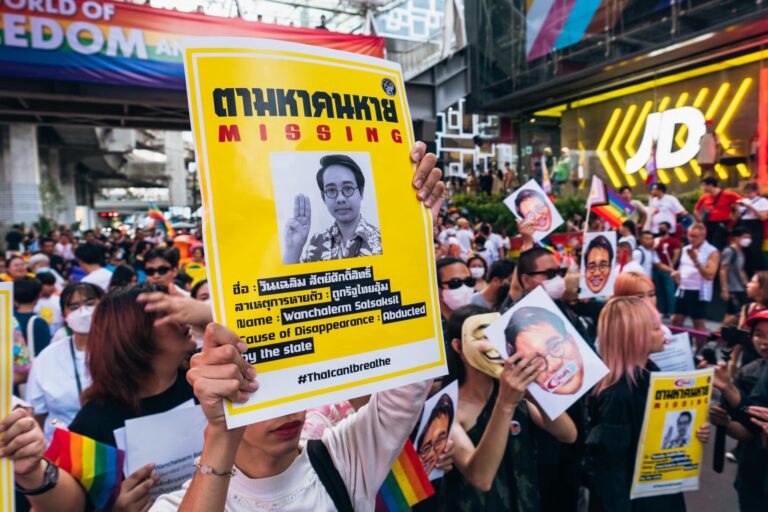
International Convention for the Protection of all Persons from Enforced Disappearances (ICPPED)

Overview: ICPPED is a UN treaty adopted in 2006, aimed at preventing enforced disappearances, which are considered crimes against humanity. Adopted in 2006 and entering into force in 2010, the convention requires states to take measures to prevent enforced disappearances, investigate such acts, and bring those responsible to justice. It also ensures the rights of victims and their families to know the truth about the fate of the disappeared persons
Party Status: Yes
Date of ratification: 14 May 2024
 
More info on the ICPPED (need hyperlink)
lukkate
The Convention on the Elimination of All Forms of Discrimination against Women (CEDAW)

Overview: CEDAW is a UN treaty adopted in 1979 that defines discrimination against women and sets an agenda to end it. It commits countries to take legal and social measures to ensure gender equality and to abolish discriminatory laws and practices.
Party Status: Yes
Date of ratification: 9 August 1985
 
More info on the CEDAW (need hyperlink)
MR
International Convention on the Elimination of All Forms of Racial Discrimination (ICERD)

Overview: ICERD is a UN treaty adopted in 1965 that aims to eliminate racial discrimination worldwide. It requires countries to prohibit and eliminate racial discrimination in all its forms and to promote understanding among all races
Party Status: Yes
Date of ratification: 28 January 2003
 
Bangkok
International Covenant on Economic, Social, and Cultural Rights (ICESCR)

Overview: ICESCR is a UN treaty adopted in 1966 that commits its parties to work towards the granting of economic, social, and cultural rights to individuals. This includes rights such as the right to work, education, health, and an adequate standard of living.
Party Status: Yes
Date of ratification: 9 August 1985
Childrensrights
Convention on the Right of the Child (CRC)

Overview: CRC is a UN treaty adopted in 1989 that aims to protect the rights of children around the world. It outlines children's rights in four main areas: survival, development, protection, and participation. The CRC requires countries to ensure that all children have access to education, healthcare, and a safe environment, and are protected from abuse, exploitation, and discrimination.
Party Status: Yes
Date of ratification: 27 March 1992
 
More info on the CAT (need hyperlink)
26nov25bow
Convention on the Rights of Persons with Disabilities (CRPD)

Overview: CRPD is a UN treaty adopted in 2006 that aims to protect the rights and dignity of persons with disabilities. It requires countries to ensure that people with disabilities enjoy full equality under the law and have access to education, employment, health services, and social protection
Party Status: Yes
Date of ratification: 29 July 2008
Migrantworkers
International Convention on the Protection of the Rights of All Migrant Workers and Members of their Families (ICRMW)

Overview: ICRMW is a UN treaty adopted in 1990. It aims to protect the human rights of migrant workers and their families, regardless of their legal status. The convention requires countries to ensure fair treatment, safe working conditions, access to education and healthcare, and protection from abuse and exploitation.
Party Status: No
Date of ratification: N/A