
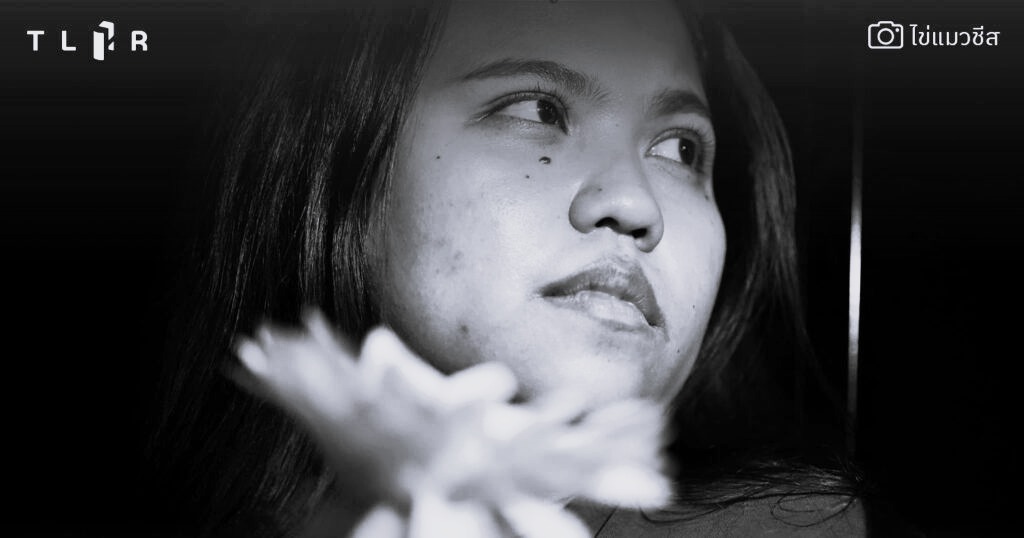
No. 52/2024: “Bung” Netiporn Sanesangkhom
Victim Name:
“Bung” Netiporn Sanesangkhom
Detention Status:
Died in custody (on May 14, 2024)
Date of Adoption:
9 December 2024
Categories:
- Category 1: Detention without legal basis
- Category 2: Detention resulting from the exercise of fundamental freedoms guaranteed by international law
- Category 5: Detention resulting from discrimination on the grounds of ethnic origin, political opinion, etc.
Overview & Facts
Information on the Violation of Rights
- On 8 February 2022, Bung Netiporn and activists from the “Thalu Wang” group held a symbolic activity in front of Siam Paragon department store by conducting a public opinion poll on the topic, “Do you think the royal motorcade causes inconvenience?” Then they travelled to the area in front of Sa Pathum Palace, where they faced police officers.
.
Charges
- On 10 March 2022, criminal proceedings were initiated against the activists involved in the poll. Bung was charged under the Criminal Code Section 112 (Lèse-Majesté), Section 116 (Sedition), and Section 368 (Jointly disobeying an official’s order). On the same day, the Bangkok South Criminal Court granted her provisional release (bail) with conditions prohibiting any actions that would “cause damage to the monarchy” and prohibiting participation in any assembly that might “cause chaos in the country.”
.
First Bail Revocation
- On 3 May 2022, the Bangkok South Criminal Court read an order revoking Bung’s bail, following a petition filed by the investigator from Pathumwan Police Station. The petition alleged that the two violated the bail conditions during an opinion poll activity at Victory Monument on 13 March 2022, titled “Royal Motorcade, Farmers’ Mob, Debt Problems, Land Monopoly by Capitalists-Feudalists.” The poll asked the question, “Are you willing to give your house to the royal family?” with two options: Yes and No. The defendants participated in this activity after the Thalu Wang – ThaluWang Facebook page had posted an invitation for the public to join the assembly.
- The Court justified the bail revocation by stating, “As a result of the defendants’ group posting messages inviting people to join the assembly, which led the investigating officer to file a request for the revocation of the provisional release order, this is similar in nature and method to the actions of the defendant and her associates that the investigating officer had previously requested to detain, and such posting is likely to cause, in addition to the defendant’s group and their associates, the general public, including those with different opinions from the defendant’s group, to join or observe the defendant’s group’s assembly, which may lead to a large number of participants, potentially causing chaos in the country. Furthermore, facts based on the photographs attached to the request for the revocation of the provisional release order show that, in addition to the defendant’s group and their associates, the People’s Centre to Protect the Monarchy (PCPS) group also participated in an assembly near where the defendant’s group was conducting activities, and during the activity, a scuffle occurred because the Thalu Wang group walked into the assembly area of the PCPS group.”
- “Therefore, the defendant’s actions are deemed to be participating in an assembly that caused chaos in the country, which violates the prohibition condition set by the Court in the provisional release order. Hence, the Court orders the revocation of the provisional release order for the defendant.”
.
Detention and Indictment
- The bail revocation led to Bung’s detention at the Central Women’s Correctional Institution from 3 May to 4 August 2022, a period of 94 days, during which she began a hunger strike protest for 64 days.
- Later, on 30 May 2022 (while she was in detention), the public prosecutor indicted her on charges of “Jointly defaming the King, Jointly sedition, Jointly obstructing officials in the performance of their duties by jointly committing an offence with 3 or more people, Jointly insulting an official in the performance of their duties, and Jointly disobeying an official’s order” under the Criminal Code Sections 112, 116, 136, 138, 140, and 368.
- On 4 August 2022, the Court granted her bail after she had submitted bail requests more than 8 times, imposing strict conditions, including wearing an EM bracelet, prohibition from leaving her residence at night (7:00 PM – 6:00 AM), and prohibition from travelling outside of Thailand.
.
Second Bail Revocation
- The Bangkok South Criminal Court scheduled a hearing for the request to revoke the bail of Tawan, Defendant 1, and Bung, Defendant 3, after the investigating officer from Pathumwan Police Station filed a petition on August 11, 2023. The petition alleged that both had participated in an assembly in front of the Ministry of Culture on August 6, 2023, demanding the removal of Senator Naowarat Pongpaiboon as a National Artist. The petition claimed they used spray paint, launched flares and smoke flares, causing chaos in the country, which violated the bail condition previously set by the Court: “Prohibited from committing any act similar to that which was alleged, which would be detrimental to the Monarchy, or participating in any activity that might cause chaos in the country.”
- On 26 January 2024, the Bangkok South Criminal Court read the order, finding that the facts presented in the petitioner’s testimony showed the defendant violated the bail conditions. However, based on the police testimony, there was no evidence to indicate how the defendant’s participation in the said activity constituted a violation of the condition, as the objective of the activity was to demand the removal of Senator Naowarat Pongpaiboon as a National Artist, which was not an activity detrimental to the monarchy that would violate the bail condition.
- Nevertheless, the evidence from the petitioner was admissible, showing that Defendant 3 had spray-painted the personal flag of Her Majesty the Queen, which could cause damage to the monarchy, constituting a violation of the bail condition that prohibited acts similar to the alleged offense that would be detrimental to the monarchy.
- The Court therefore ordered the revocation of bail for Defendant 3 (Netiporn) but not for Defendant 1 (Tawan), as there was no evidence that Defendant 1 was involved in the spray-painting.
- After hearing the Court’s order, Bung consulted with her lawyer and decided not to seek bail that day, resulting in her immediate transfer to the Central Women’s Correctional Institution.
.
Death in Custody
- On 27 January 2024 (one day after the second detention), Bung began a hunger and water strike in protest, with two demands: 1) Judicial reform, and 2) No political dissidents should be detained again.
- On 14 May 2024, after 110 days in this second detention, Bung suffered a sudden cardiac arrest at the prison hospital (around 6:20 AM). She was transferred to Thammasat University Hospital, and doctors confirmed her death at 11:22 AM.
- Her death is considered a “death in the custody of an official” under the Criminal Procedure Code Section 150, which requires an inquest. It was noted that the autopsy report indicated she had “faulty intubation.” Bung Netiporn is the second detainee in a Section 112 case to die in custody, following “A-Kong” (Ampon), who died on 8 May 2012.
.
(Information as of 16 November 2025)
WGAD Opinions
Arbitrary Detention under Category I: Lack of Legal Basis
- The Working Group on Arbitrary Detention (WGAD) is of the opinion that Bung’s detention constitutes arbitrary detention under Category I due to the absence of a legal basis to support the deprivation of her liberty.
- The Working Group explains that the principle of legality requires that the law must be sufficiently precise to allow the general public to access and understand what conduct constitutes an offense, enabling individuals to conform their conduct to the law.
- Considering Section 112 (Lèse-Majesté), the primary law applied in Netiporn’s detention, the Working Group is of the opinion that it is vague and overly broad. Specifically, the legal text does not clearly define what form of expression constitutes “defaming, insulting, or threatening” the monarchy. Consequently, its enforcement is entirely dependent on the discretion of the authorities. For this reason, the Working Group holds that Section 112 is in violation of international human rights standards (such as ICCPR Article 15(1)) and cannot serve as a legitimate “legal basis” for detaining individuals.
- Furthermore, the Working Group is of the opinion that the process of revoking Netiporn’s bail, which led to her final detention, also lacked a legal basis.
- The Working Group explains that Article 9(3) of the International Covenant on Civil and Political Rights (ICCPR) stipulates that pre-trial detention shall not be the general rule; instead, it must be an exceptional measure. Detention must be based on an individualized determination that it is reasonable and necessary for the sole purposes of preventing flight, interference with evidence, or the commission of further offenses.
- The Working Group finds that the Court’s order to revoke Netiporn’s bail on January 26, 2024, citing her “spray-painting a flag with the Queen’s symbol,” was not based on an individualized assessment of the necessity and reasonableness of detention. Moreover, the Court failed to consider alternative measures less restrictive than detention.
- The Working Group further noted that the bail conditions Netiporn previously received (e.g., prohibiting “causing damage to the monarchy” or “causing chaos”) were also “too vaguely worded,” rendering them unlawful conditions. Additionally, strict conditions such as the prohibition from leaving her residence at night (7:00 PM – 6:00 AM) and the requirement to report every 30 days resembled house arrest, a restriction the Working Group deems equivalent to a form of deprivation of liberty.
.
Arbitrary Detention under Category 2: Exercise of Fundamental Freedoms under International Law
- The Working Group is of the opinion that the deprivation of Bung’s liberty constitutes arbitrary detention under Category II because it is a direct result of her exercise of the rights to freedom of expression and freedom of peaceful assembly. These rights are clearly protected under ICCPR Articles 19 and 21.
- The actions that led to her charges and detention were all exercises of protected rights. The Working Group points out that her actions, such as conducting an opinion poll on the royal motorcade, constitute “political discourse” and “commentary on public affairs.” Even the action leading to bail revocation—spray-painting a flag with a symbolic crest—is considered symbolic expression. The Working Group stresses that the law should not be used to protect abstract notions or national symbols.
- The Working Group explains that while these rights may be restricted, such restrictions must strictly meet three conditions: (1) Provided by law, (2) For a legitimate objective (such as national security or public order), and (3) Necessary and proportionate.
- Netiporn’s detention “failed” to meet these conditions in all respects. First, the detention was not provided by law because Section 112 (as analyzed in Category I) is vague and overly broad, and therefore not a legitimate “law” for restricting rights. Second, the detention was not necessary and proportionate. The Working Group reiterates that all public figures, including Heads of State, are legitimately subject to criticism. The mere fact that the expression was viewed as “insulting” is insufficient to warrant criminal punishment. The Thai Government presented no evidence to establish a “direct and immediate connection” between Netiporn’s actions and a threat to national security or public order. Furthermore, punishment by imprisonment is considered “grossly disproportionate” and “never an appropriate penalty” for offenses of this nature.
- Therefore, as all aspects of the detention (both the charges and the bail revocation) originated from the exercise of protected rights, and the restrictions imposed were not aligned with the exceptions permitted by international law, the deprivation of Netiporn’s liberty constitutes arbitrary detention under Category II.
.
Arbitrary Detention under Category 5: Detention Resulting from Discrimination on the Grounds of Ethnic Origin, Political Opinion, etc.
- The Working Group is of the opinion that the deprivation of Bung’s liberty constitutes arbitrary detention under Category V because it violates international law on the basis of discrimination due to her political opinions and her status as a human rights defender.
- The Working Group highlights that when a detention results from the exercise of civil and political rights (as proven in Category II), there is a “strong presumption” that the detention is motivated by discrimination based on political opinion.
- The Working Group also considered several indicators confirming this discrimination:
- First, the Working Group found a clear “pattern of persecution” against Netiporn, citing that she faced 7 legal cases, all linked to her political expression and human rights activism.
- Second, the Working Group noted an “overall pattern in Thailand” of detaining individuals who peacefully oppose the lèse-majesté law, with Netiporn’s case serving as another example of this pattern.
- Based on these factors, the Working Group concludes that Netiporn’s political opinions were “at the centre of the present case,” and the authorities displayed a discriminatory attitude towards her. Consequently, the deprivation of her liberty constitutes arbitrary detention under Category V.
WGAD Requests to the Thai Government
- Has any compensation or other form of remedy been provided to Bung’s family?
- Has an investigation been conducted into the violations of Bung’s rights, including the circumstances of her death, and if so, what were the findings of that investigation?
- Have any laws or practices been amended or changed to ensure Thailand’s laws and practices align with its international obligations and with the present opinion?
- What other measures have been taken to give effect to this opinion?
International LEGAL FRAMEWORK:
- International Covenant on Civil and Political Rights (ICCPR)
-
- Article 2: Right to non-discrimination
- Article 9: Right not to be subjected to arbitrary arrest or detention
- Article 19: Right to freedom of opinion and expression
- Article 26: Principle of equality before the law and non-discrimination
- Universal Declaration of Human Rights (UDHR)
- Article 2: Right to non-discrimination
- Article 7: Principle of equality before the law
- Article 9: Prohibition of arbitrary arrest, detention, or exile
- Article 19: Right to freedom of opinion and expression